




The Hidden Danger of Faulty and Manipulated Lithium Batteries
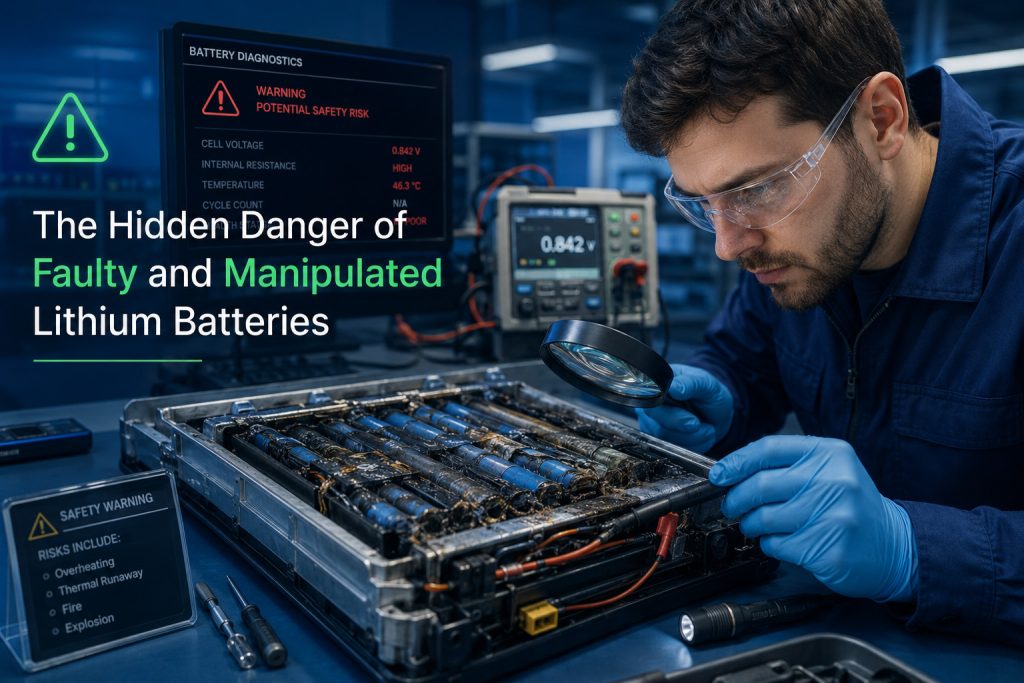
The Hidden Danger of Faulty and Manipulated Lithium Batteries

Why Lithium Battery Fires Are Becoming a Growing Concern
Lithium-ion batteries power much of modern life. From smartphones and laptops to e-bikes, electric vehicles, power tools, and energy storage systems, these batteries offer exceptional energy density and convenience. However, when damaged, defective, improperly manufactured, or intentionally manipulated, lithium batteries can become a serious fire hazard.
As battery-powered devices become increasingly common, understanding the causes and consequences of lithium battery fires is essential for consumers, businesses, and regulators alike.
What Makes Lithium Batteries Different?
Unlike conventional batteries, lithium-ion batteries store a large amount of energy in a compact space. Under normal conditions, they operate safely and efficiently. However, when internal components fail, the stored energy can be released rapidly, generating intense heat and potentially triggering a chain reaction known as thermal runaway.
Thermal runaway occurs when heat generated inside a battery causes further chemical reactions, producing even more heat. Once this process begins, it can be difficult to stop and may result in fire, explosion, or the release of toxic gases.
Common Causes of Lithium Battery Fires
Manufacturing Defects
Even minor flaws during production can create dangerous conditions inside a battery. Contaminants, damaged separators, or poorly assembled cells can lead to internal short circuits that may eventually trigger overheating and fire.
Physical Damage
Dropping, crushing, puncturing, or exposing a battery to impact can compromise its internal structure. Damaged cells may not fail immediately, but they can develop internal faults that cause fires hours, days, or even weeks later.
Overcharging and Improper Charging
Using incompatible chargers or bypassing built-in safety mechanisms can expose batteries to voltages beyond their design limits. Excessive charging generates heat and can destabilize battery chemistry, increasing the risk of ignition.
Exposure to Extreme Temperatures
High temperatures accelerate chemical degradation and increase internal pressure within battery cells. Batteries left in direct sunlight, hot vehicles, or near heat sources are more vulnerable to failure.
Unauthorized Modifications and Manipulation
One of the most concerning causes of lithium battery fires is deliberate manipulation. Users may modify battery packs to increase performance, extend range, bypass safety controls, or repair damaged units without proper expertise.
Examples include:
- Removing or disabling battery management systems (BMS)
- Replacing cells with incompatible components
- Altering charging circuits
- Increasing operating voltage beyond manufacturer specifications
- Using counterfeit replacement batteries
Such modifications can eliminate critical safety protections and significantly increase the likelihood of thermal runaway.
The Rise of E-Bike and Micro mobility Battery Incidents
In many cities around the world, e-bike and scooter battery fires have become a growing public safety issue. Investigations frequently reveal the use of uncertified chargers, aftermarket battery packs, or modified electrical systems.
Because these batteries are often charged indoors, fires can spread rapidly within homes, apartment buildings, and commercial premises. In some cases, occupants have only seconds to escape once thermal runaway begins.
Why Lithium Battery Fires Are So Challenging
Traditional fires typically involve combustible materials that burn from external ignition sources. Lithium battery fires are different because the battery itself can generate oxygen and sustain combustion internally.
As a result:
- Fires can reignite after appearing extinguished.
- Large quantities of water may be required for cooling.
- Toxic and corrosive gases can be released.
- Fire temperatures can exceed those of many ordinary household fires.
Emergency responders often require specialized procedures when dealing with large lithium battery incidents.
Warning Signs of Battery Failure
Consumers should remain alert for warning signs that may indicate a battery problem:
- Excessive heat during charging or use
- Swelling or bulging battery packs
- Strange odours
- Hissing or popping sounds
- Smoke or vapor emissions
- Sudden loss of performance
If any of these symptoms occur, the device should be disconnected from power and moved to a safe location if it can be done without risk.
Best Practices for Battery Safety
To reduce the likelihood of lithium battery fires:
- Purchase batteries from reputable manufacturers.
- Use only approved chargers and accessories.
- Avoid modifying battery packs or safety systems.
- Replace damaged batteries immediately.
- Follow manufacturer charging instructions.
- Store batteries away from extreme heat and moisture.
- Do not charge batteries unattended whenever possible.
- Recycle batteries through authorized collection programs.
The Need for Greater Awareness
Lithium-ion technology has transformed modern life and remains essential to the transition toward cleaner energy and transportation. However, the benefits of these batteries must be balanced with responsible use and proper safety practices.
Many lithium battery fires are preventable. Improved manufacturing standards, stronger regulations against counterfeit products, better consumer education, and greater awareness of the dangers of battery manipulation can significantly reduce the risk.
As battery-powered technologies continue to expand, safety must remain a shared responsibility among manufacturers, retailers, regulators, and users. Understanding the risks associated with faulty and manipulated lithium batteries is an important step toward preventing future incidents and protecting lives and property.