




Medical Device Health Checks: Why Battery Condition Matters More Than You Think
Medical Device Health Checks: Why Battery Condition Matters More Than You Think
In today’s healthcare environment, medical devices play a critical role in supporting patient care, monitoring health conditions, and improving quality of life. From mobility scooters and patient lifts to portable diagnostic equipment, defibrillators, and home healthcare devices, reliable performance is essential. One of the most overlooked yet important aspects of maintaining these devices is ensuring that their batteries remain in good condition.
The Heart of Every Portable Medical Device
Many modern medical devices rely on rechargeable batteries to provide consistent and dependable power. These batteries allow equipment to operate safely and efficiently, whether in hospitals, care homes, clinics, or patients’ homes.
However, like all rechargeable batteries, performance naturally declines over time. Reduced capacity, shorter operating times, unexpected shutdowns, and charging issues can all indicate that a battery requires attention or replacement.
Why Regular Health Checks Are Important
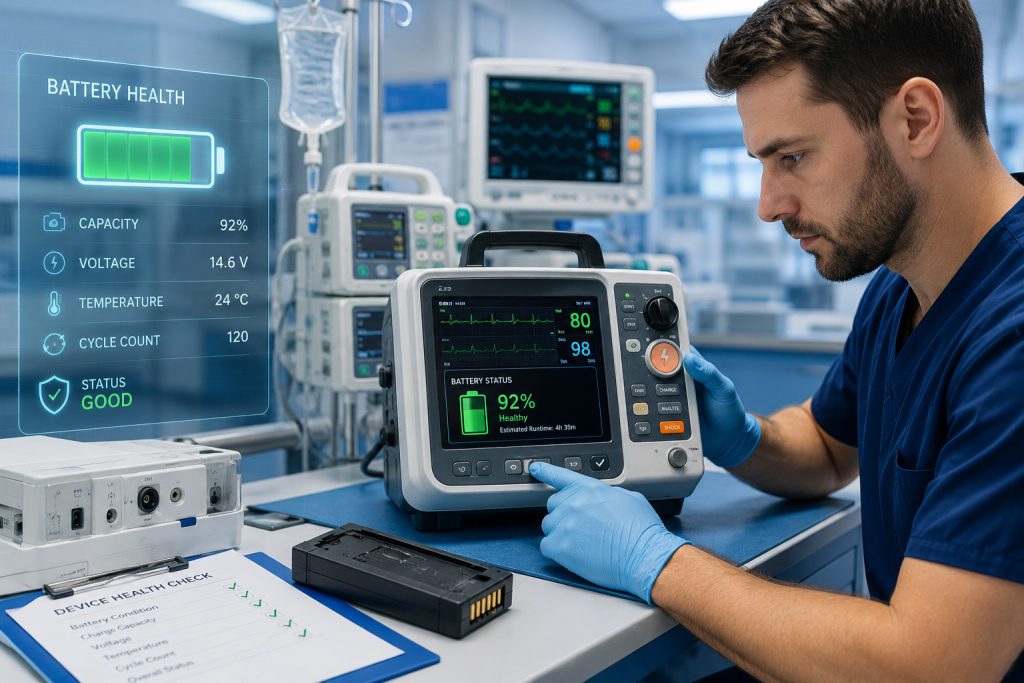
Routine medical device health checks help identify potential issues before they become serious problems. During a battery health assessment, technicians can evaluate:
- Battery capacity and performance
- Charging efficiency
- Voltage stability
- Signs of wear or degradation
- Safety and reliability of battery connections
Early detection of battery deterioration can help prevent equipment downtime, reduce maintenance costs, and most importantly, ensure that critical medical devices remain available when needed.
Patient Safety Comes First
For many patients, medical devices are not simply convenient tools they are essential for daily living and health management. A battery failure at the wrong moment can cause unnecessary disruption, inconvenience, or even compromise patient care.
Regular battery inspections help maintain the reliability of equipment and provide peace of mind for healthcare providers, caregivers, and patients alike.
Extending Equipment Lifespan
Replacing an entire medical device can be costly. In many cases, maintaining or replacing the battery can significantly extend the operational life of the equipment.
Proper battery care includes:
- Following manufacturer charging recommendations
- Avoiding prolonged storage in discharged conditions
- Keeping batteries clean and dry
- Scheduling regular performance checks
- Replacing batteries when performance begins to decline
These simple measures can maximise battery life and help protect your investment in medical equipment.
Supporting Sustainability Through Responsible Battery Management
As healthcare providers and organisations increasingly focus on sustainability, responsible battery management has become more important than ever. When batteries reach the end of their service life, they should be recycled through approved channels rather than disposed of as general waste.
Recycling allows valuable materials to be recovered and reused while reducing environmental impact and supporting a more sustainable future.
Professional Battery Health Checks and Support
At Battery Service Centre, we understand the importance of dependable power solutions for medical devices. Our battery testing, maintenance, replacement, and recycling services help healthcare providers, care facilities, and individual users keep their equipment operating safely and efficiently.
Whether you need a battery health assessment, replacement battery, or responsible recycling solution, our experienced team is here to help ensure your medical devices remain reliable when they matter most.
Keep Your Medical Devices Powered with Confidence
Regular battery health checks are a simple but essential part of medical device maintenance. By monitoring battery condition and addressing issues early, you can improve reliability, enhance patient safety, reduce costs, and extend the life of valuable medical equipment.
Contact Battery Service Centre today to learn more about our battery testing, maintenance, replacement, and recycling services.